
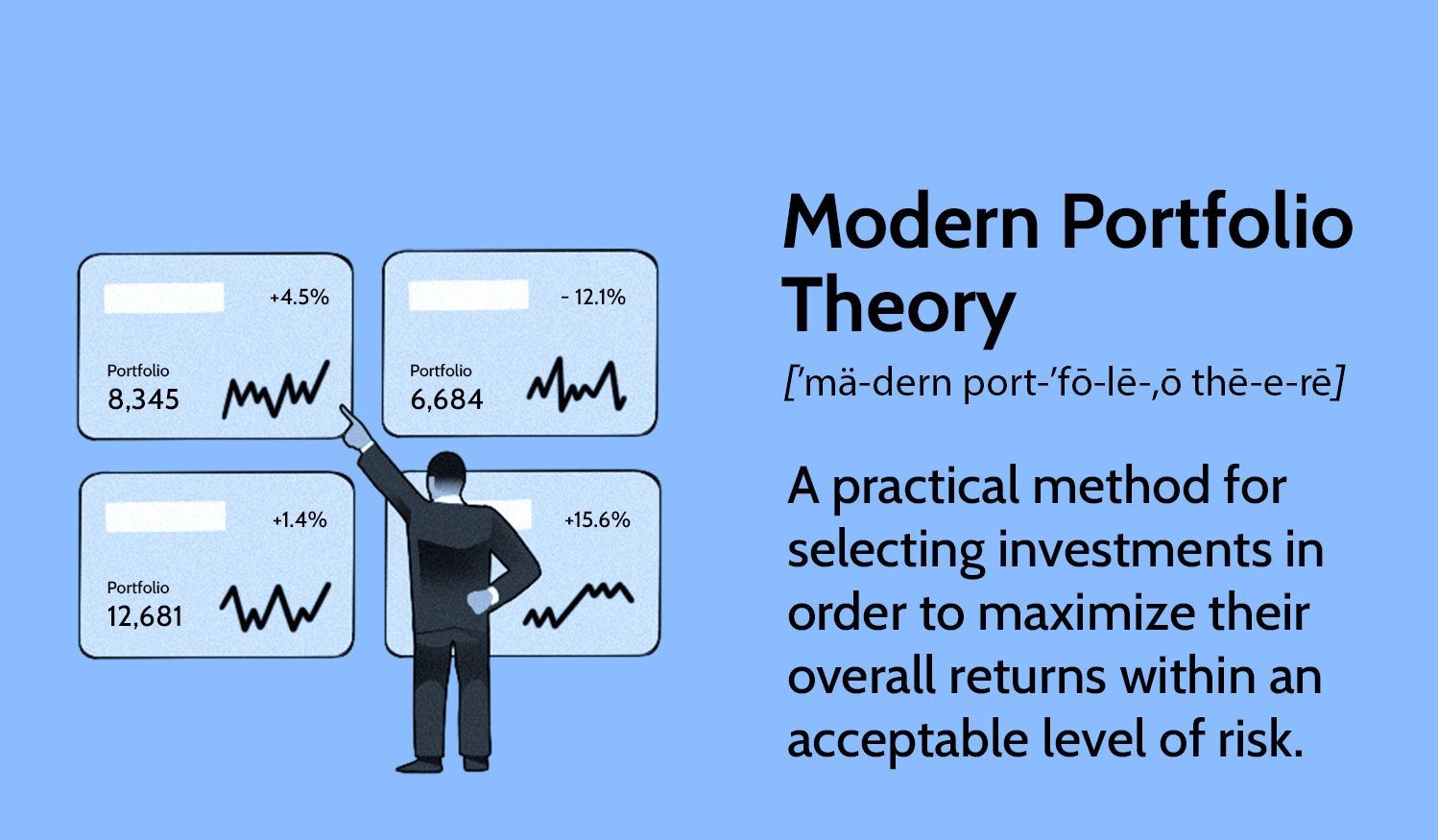
Modern portfolio theory, commonly known as the Markowitz model, is an investment strategy that has gained tremendous popularity over the years. Developed by Harry Markowitz in 1952, it emphasizes diversification and risk management to help investors maximize their returns while minimizing their risks. In this blog, we’ll explore the concept of portfolio optimization in detail, discussing its key features, benefits, and challenges.
The Basics of Portfolio Optimization
Portfolio optimization is the process of selecting a mix of assets to maximize returns while minimizing risks. The idea is to allocate your investment capital across a range of assets, such as stocks, bonds, and commodities, to create a diversified portfolio. By diversifying your investments, you can spread your risks and potentially earn higher returns than if you had invested all your money in one asset class.
The Role of the Markowitz Model
The Markowitz model is a mathematical framework for portfolio optimization that takes into account the expected return of different assets and their level of risk. Based on this information, the model helps investors identify the optimal mix of assets that will deliver the highest possible return for a given level of risk.

Benefits of Portfolio Optimization
By optimizing your portfolio, you can reap several benefits, such as:
– Reduced Risk: Diversification helps reduce the impact of market volatility on your investments. – Higher Returns: By investing in a mix of assets with varying degrees of risks, you can potentially earn higher returns than by investing in individual assets. – Better Asset Allocation: Portfolio optimization helps identify the optimal mix of assets that aligns with your investment goals and risk tolerance.
Challenges of Portfolio Optimization
While portfolio optimization can be highly beneficial, it comes with its own set of challenges, such as:
– Complexity: Portfolio optimization requires a deep understanding of different asset classes, financial markets, and risk management. – Uncertainty: While portfolio optimization can help minimize risks, it cannot eliminate them entirely. It is essential to constantly monitor and adjust your portfolio to account for changing market conditions. – Cost: Achieving portfolio optimization can be expensive in terms of transaction costs, management fees, and other expenses.
Conclusion
Portfolio optimization is a powerful investment strategy that can help investors achieve their financial goals. Using the Markowitz model, investors can build diversified portfolios that deliver higher returns while minimizing risks. It is essential to remember that portfolio optimization requires continuous monitoring and adjustment to account for changing market conditions.
Meta description for search engine
Learn all about portfolio optimization and the Markowitz model. Discover how you can maximize your returns while minimizing your risks through diversification and risk management. Find out the benefits and challenges of this investment strategy.