
Python is an open-source programming language that is widely used for web development, data analysis, and machine learning. Its popularity is driven by its simplicity and versatility, but what really sets it apart from other programming languages are its powerful libraries. In this article, we’ll dive into some of the most essential Python libraries that can help you build better software faster.
Why Python Libraries are Essential for Developers
As a developer, you’re constantly looking for ways to speed up your workflow and achieve more with less effort. Python libraries provide a set of pre-written code that can be reused across projects, saving you time and reducing the risk of errors. They cover a wide range of domains and functions, from web scraping to data visualization to natural language processing. Choosing the right libraries can significantly improve your productivity and the quality of your code.
Data Science Libraries
In the field of data science, Python has become the go-to language thanks to its rich ecosystem of libraries. Here are some of the most popular ones:
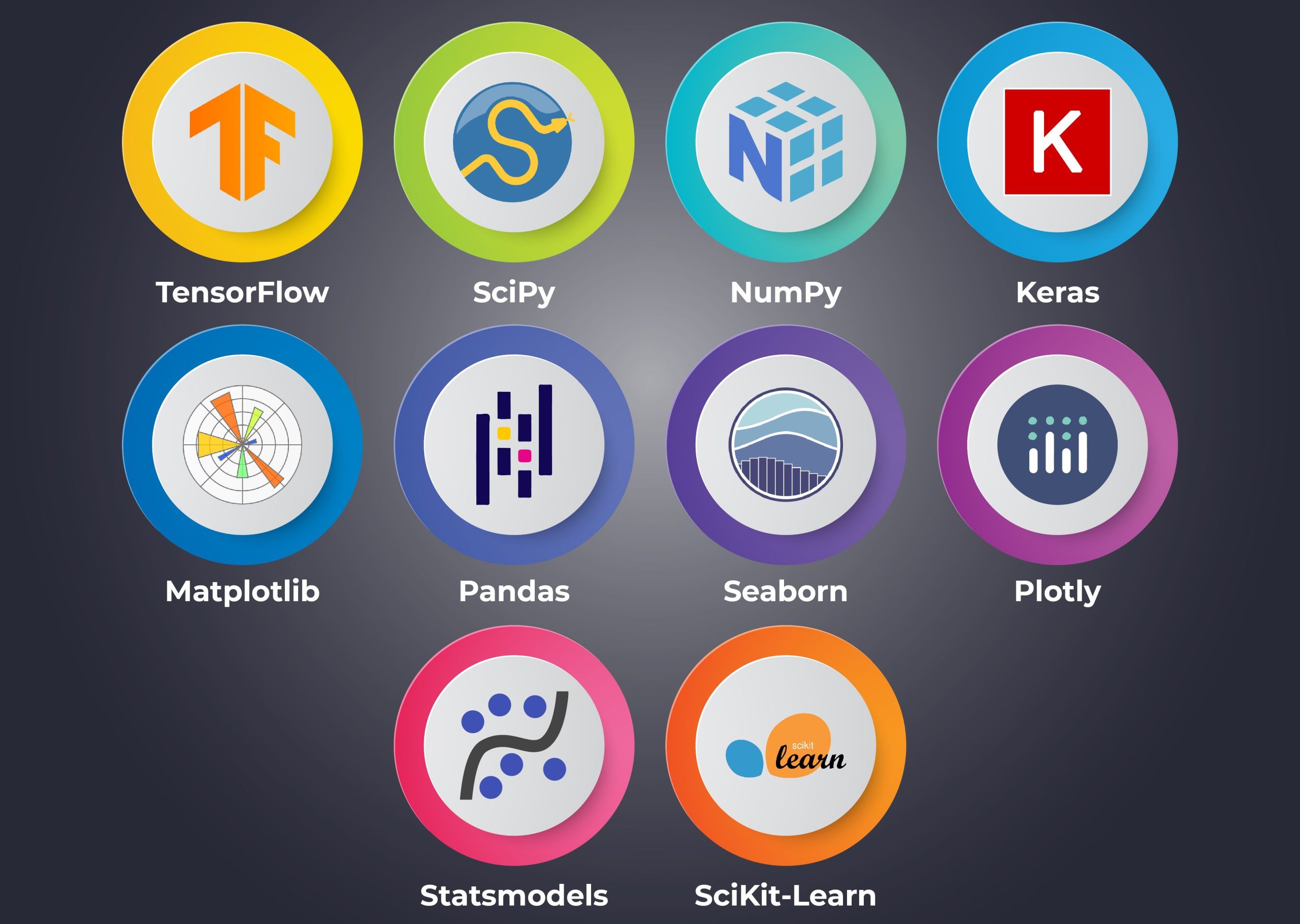
– `Pandas`: a library for data manipulation and analysis, with support for data frames, time series, and more.
– `NumPy`: a library for numerical computing, with support for arrays, linear algebra, and Fourier transforms.
– `Scikit-learn`: a library for machine learning, with support for classification, regression, and clustering algorithms.
– `Matplotlib`: a library for data visualization, with support for scatter plots, histograms, and more.
Suggested Image: A scatter plot showing the correlation between two variables, with a trend line and axis labels.

Web Development Libraries
Python is also a great choice for web development, with many frameworks and libraries available. Here are some of the most widely used ones:
– `Django`: a high-level web framework with support for authentication, routing, and database models.
– `Flask`: a micro web framework with support for templates, request handling, and routing.
– `Requests`: a library for making HTTP requests, with support for authentication, cookies, and proxies.
– `Beautiful Soup`: a library for parsing HTML and XML documents, with support for navigating the document tree and extracting data.
Suggested Image: A screenshot of a web page with HTML tags highlighted, showing the structure of the document.
Natural Language Processing Libraries
Python is also a popular choice for natural language processing, thanks to its strong string manipulation capabilities. Here are some of the most useful libraries:
– `NLTK`: a library for natural language processing, with support for tokenization, stemming, and parsing.
– `Spacy`: a library for advanced natural language processing, with support for named entity recognition, part-of-speech tagging, and sentiment analysis.
– `Gensim`: a library for topic modeling and similarity analysis, with support for latent semantic analysis and clustering.
Suggested Image: A word cloud generated from a text corpus, showing the most frequent words in the document.
Conclusion
Python libraries are a powerful tool that can help you build better software faster. By reusing pre-written code, you can save time, reduce the risk of errors, and focus on what really matters: solving problems and creating value. Whether you’re a beginner or an experienced developer, taking advantage of Python libraries can take your skills to the next level.
So what are you waiting for? Start exploring the vast world of Python libraries and see how much you can achieve with just a few lines of code.
Meta description for search engine: Discover the most essential Python libraries for data science, web development, and natural language processing. Save time and improve your productivity by reusing pre-written code. Start exploring today!